When our van pulled up to Pujol, a few people in our group looked out the window and asked if we were in the right place.
We were on a quiet, residential street in Mexico City's Polanco neighborhood, parked in front of what looked like a private house with a plain gate and plenty of concrete. There was no sign that we were in front of one of the best restaurants in the world.
This is what a night at Pujol is actually like: where it is, how the corn-focused tasting menu works, every course we ate, and why the service is the thing people talk about for years. It's also the farewell dinner on Type 2 Travel's May 12–16, 2027 Mexico City food tour, so consider this a preview.
Chef Enrique Olvera opened Pujol in 2000, and since then, it's earned two Michelin stars and a long run on the World's 50 Best Restaurants list, peaking at No. 5 in 2022. His cooking starts with Mexican ingredients and traditions and builds from there. Produce gets driven up from Oaxaca several times a week. Herbs come from the restaurant's own garden. Pujol even runs its own tortillería, Molino El Pujol, over in Condesa.
We were there that night for Pujol's traditional tasting menu, which is built around corn. Corn has been the foundation of Mexican food for thousands of years, and Olvera takes it as seriously as a sommelier takes wine. Different regions of Mexico grow different varieties of corn, in different colors, and each one has its own flavor. Many of these heirloom varieties disappeared when farmers were pushed toward cheap, industrial corn—and Pujol is on a mission to bring them back.
We settled into our private dining room, which feels a little like being invited into someone's very stylish home (VERY stylish home). It's tucked behind a curtain off the main dining room, with a wood-block floor, a wall of vinyl records, and big windows looking out onto the garden.
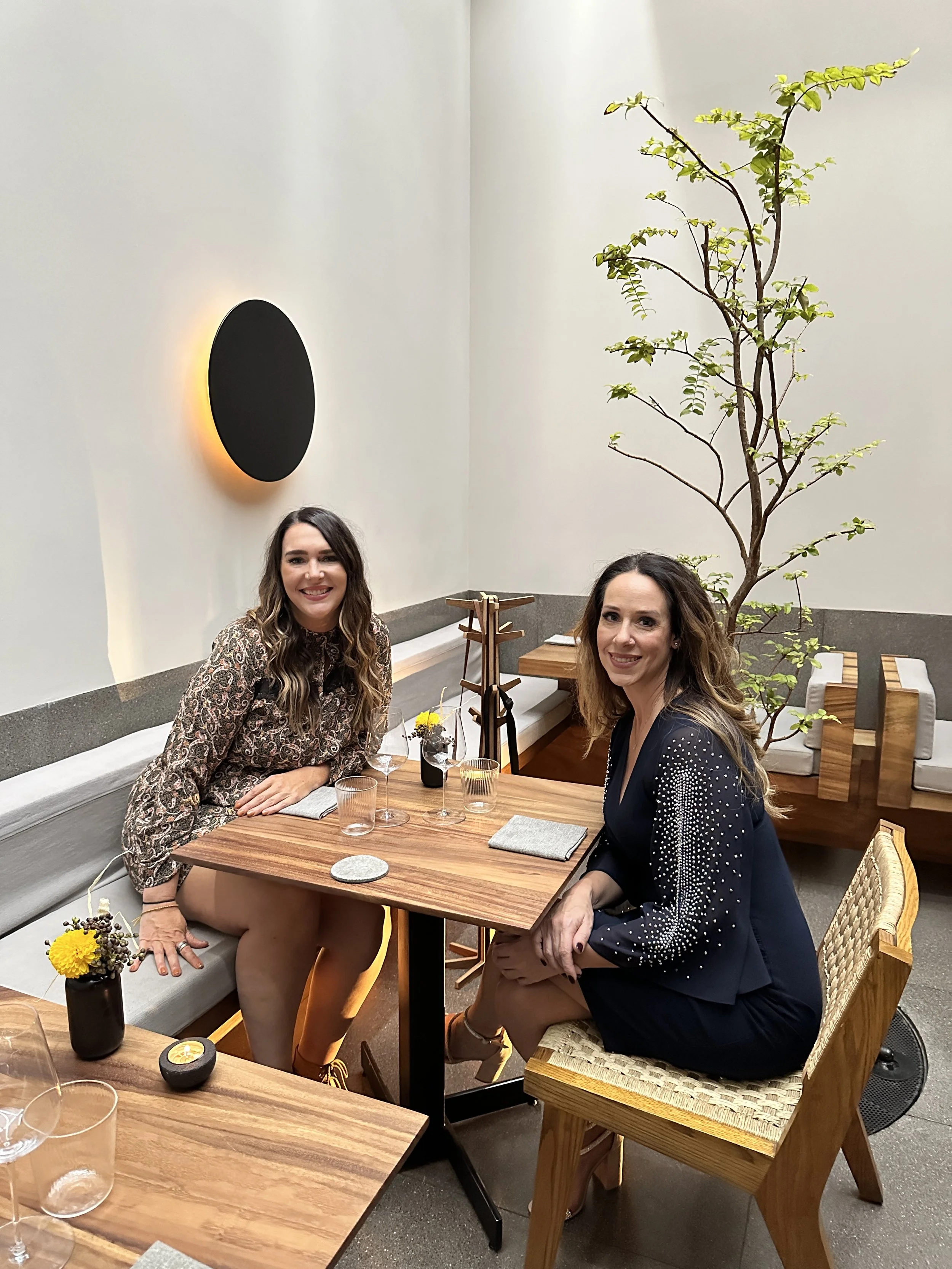
We were about to eat for three hours, and we knew it.
The rest of the house has the same calm feel, with warm parota wood on the ceilings, low wooden chairs inspired by the Mexican designer Clara Porset, and a skylit courtyard in the middle with a single olive tree growing out of a bed of stone. Olvera has said he wanted to get away from white tablecloths, and it shows.
We ordered drinks and waited to see if the food lived up to the hype.
Spoiler alert: it did.
The service is the part people remember
At Pujol, the service is where the two Michelin stars show first. We didn't just have a server—we had an entire team taking care of our group. There was a person just responsible for filling up water glasses. There was the sommelier, taking care to describe the wine pairing option and answering questions. When it was time for a course, a line of servers came out of the kitchen and set a plate in front of every person at our table at the exact same moment. There was always someone to walk us through what we were eating, telling us where each ingredient was sourced, how it's used in Mexican cooking, and the particular technique the kitchen used to bring it to life.
I've been to Pujol five times, and this choreography is still the thing I tell people about most.
What we ate
After a round of small snacks, the courses began. The tasting menu changes with the seasons, so the dinner we have in May will be different from this, but it still gives you an idea of the level of artistry:
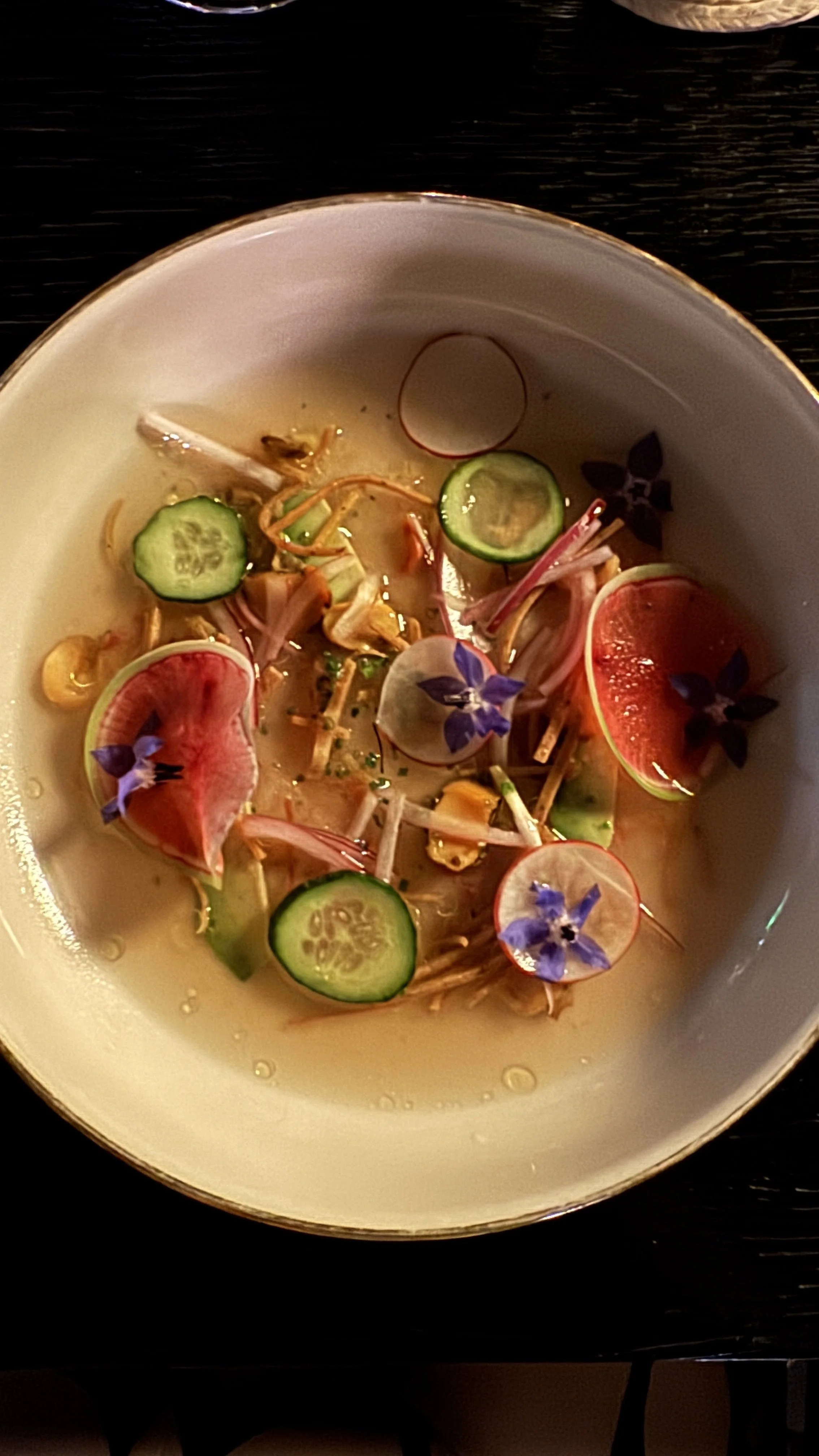
Every plate at Pujol looks like this. You almost feel bad eating it. Almost.
Stuffed chili, kombujime beetroot, bluefin tuna, green juice, and chives
A small stuffed chile with bluefin tuna and beet. Kombujime is a Japanese technique where food is cured between sheets of kombu seaweed, which gives it a deep, savory flavor. It's a great example of how Pujol borrows techniques from other cuisines while keeping the flavors Mexican.
Quelites tostada, abalone, green mole, chile pasado, and cured egg yolk
Quelites are wild edible greens that have been part of the Mexican diet since before the Spanish arrived. They came on a crisp tostada with abalone and green mole, a fresh, herby mole usually built on pumpkin seeds, tomatillos, and green chiles. Chile pasado is a northern Mexican specialty made from green chiles that are roasted, peeled, and dried in the sun. A salt-cured egg yolk was there for richness—and it delivered.
Rock fish, white beans broth, chione clams, and chile de agua
A lighter course of fish and small Pacific clams in a white bean broth. Chile de agua is a fresh chile from Oaxaca's Central Valleys that's hard to find outside the region.
Wagyu full blood, chile ajo, huitlacoche, and roasted eggplant
"Full blood" means 100% Wagyu cattle, never crossbred. It came with chileajo, a Oaxacan sauce of dried chiles and garlic, and huitlacoche, a fungus that grows on corn and has been eaten in Mexico since Aztec times. It's earthy and smoky—some people call it the Mexican truffle. This was a favorite dish among our group, for sure.
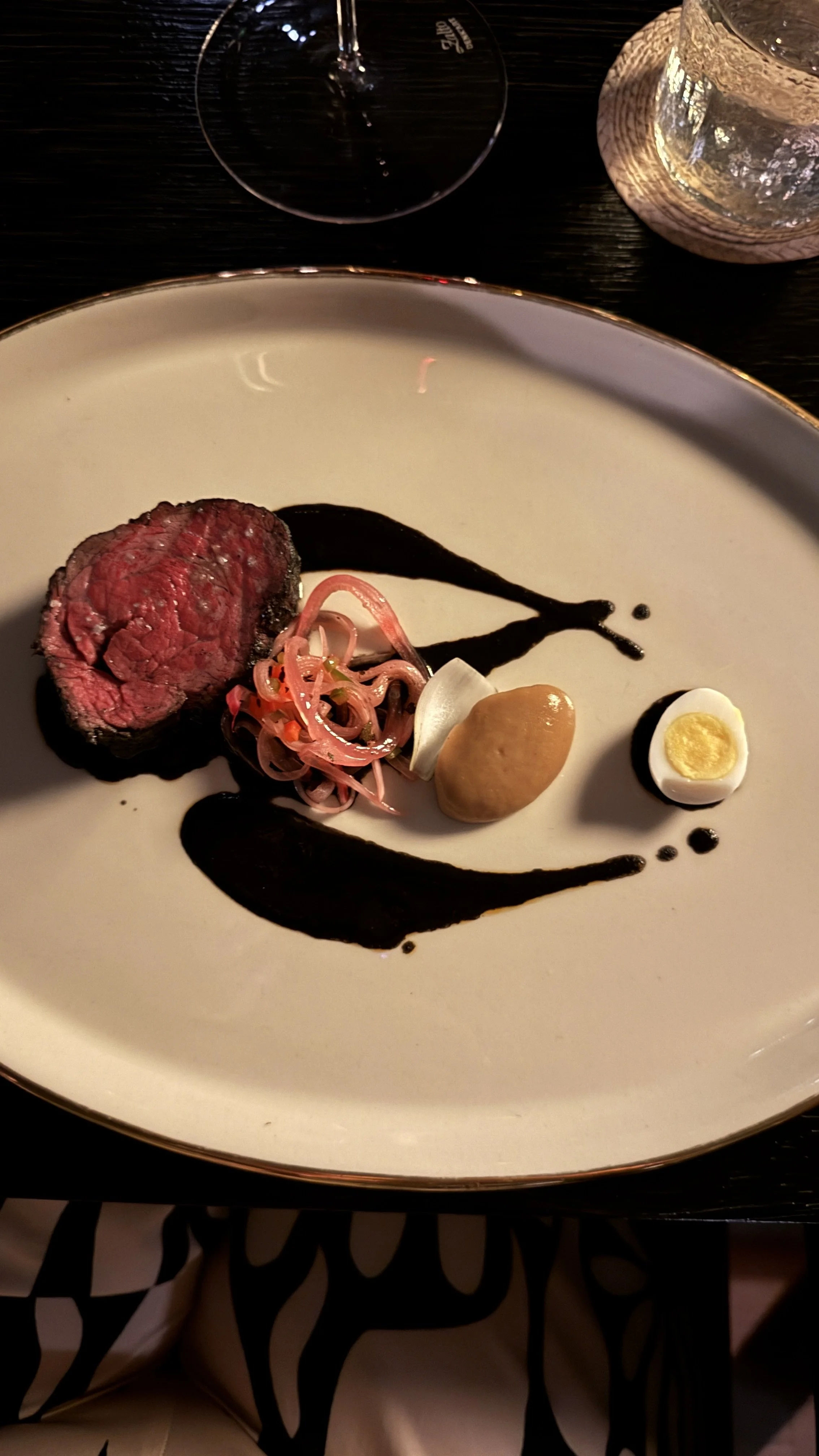
The best Waygu of my life, hands-down
Mole madre; mole nuevo made with seasonal fruit
Mole madre is the dish Pujol is famous for: a batch of mole the kitchen has kept going since 2014, reheating it and feeding it with fresh mole every couple of days, so the flavor keeps getting deeper and more complex. The day count is handwritten on the menu and changes every night. As I'm writing this, the mole madre is more than 12 years old, and I've had it every year I've been back. It's served as a ring of the aged mole around a fresh mole nuevo—so you get a little taste test on the same plate.
Goat cheese flan with fig ice cream
A tangy goat cheese flan with fig ice cream to finish. The perfect end to the meal, especially after the intense taste of the aged mole!
Three hours, and nobody rushed us
By the time the flan came out, we'd been at the table for more than three hours, and nobody had once looked at us like it was time to go. That's very much on purpose. In Mexico, there's a word for the time you spend lingering at the table after a meal: sobremesa.
It's when the plates are cleared but nobody gets up, because the talking and laughing is just as much a part of the meal as the food. It's such a normal part of eating in Mexico that servers usually won't bring the check until you ask for it. Pujol takes that seriously, too. Nobody rushed us out, so we stayed a while longer, finishing our drinks and talking through every course like we wanted to make sure the memories of the food were permanently embedded in our brains.
On the way back to our house for the evening, the van was quiet.
Finally, someone said into the dark, "That was… unbelievable."
Almost in unison, everyone answered, "Yeah."
Now THAT's the mark of a good dinner.

Why Pujol is the last night of our May trip
On our May 12–16, 2027 Mexico City food trip, Pujol is the farewell dinner. By then, you'll have spent three days eating at the city's favorite taquerías, wandering a traditional market with local chefs, and pressing tortillas by hand in a cooking class. You'll know what quelites and huitlacoche are because you'll have tasted them in their simplest form. So when you sit down at Pujol, you'll recognize what's on your plate—and you'll get to see what one of Mexico's best kitchens does with it.
If you're the kind of person who plans trips around where you're going to eat, this one was made for you. You can see the whole five-day plan, from the first-night taco crawl to this dinner, in 7 reasons to spend five days eating in Mexico City. And if you want to go deeper on why food is the best way into a culture, flavor expert Emmanuel Laroche and I talked about exactly that on the Type 2 Travel podcast.
Pujol Questions Our Travelers Ask
Is dinner at Pujol included on the Mexico City trip?
Yes. Pujol is our farewell dinner on the May 12–16, 2027 food tour, and landing the reservation is our problem, not yours. The drink pairing isn't included, but I'd tell you to get it anyway. Wines from Mexico and around the world sit alongside tequila and mezcal, each pour is picked for what's on your plate, and it makes the whole night.
How much does dinner at Pujol cost if I book it myself?
The tasting menu runs about 3,600 pesos per person, before drinks and tip. The harder part is getting in. Reservations usually book up two to three months out, and a private dining room for a group can take a year or more to land.
Is there a dress code at Pujol?
Pujol is business casual. Leave the sweatpants at the hotel, but there's no need to pack a ball gown, either. Think of what you'd wear to a nice dinner out back home.
Can Pujol handle dietary restrictions?
Yes, with a heads-up. The tasting menu is set, so the kitchen won't swap a course because you'd rather skip the beets. It can work around real dietary restrictions and food allergies, though. Tell us when you book, and we'll make sure Pujol knows long before we sit down.