This post may contain affiliate links from which I may earn commission from qualifying purchases at no cost to you.
Mexico City is a weirdly stressful city to plan a trip around. You know the food is incredible, but you've got just a few days, a hundred saved Instagram posts, and let's be real—limited stomach space at any given time.
For the first five years of Type 2 Travel, I brought groups to Mexico City in October for Día de los Muertos—and it's because of those trips that I've gotten well-acquainted with the food. Sometimes, too well-acquainted. But I always say temporary discomfort is worth the tacos. And the huarache. And the churros. And an agua fresca or four.
I've since retired that Day of the Dead trip—mostly because the overtourism is so intense that time of year that it doesn't align with the kinds of experiences Type 2 Travel believes in. But I wasn't ready to stop bringing people to Mexico City to eat. So we created a new trip in May—when the city is just as lively, the markets are wonderlands of fresh produce and amazing smells, and you get to see Mexico City on a normal week instead of its busiest one.
Here's the short version: Type 2 Travel's Mexico City food tour is a five-day, small-group trip, May 12–16, 2027, led by our own María Saenz. You land and go straight into a taco crawl, spend a morning in Roma's bakeries and cafés, cruise Xochimilco's canals to a floating farm, shop a traditional market with local chefs before a hands-on cooking class, get a free day in Coyoacán, and finish with a farewell tasting menu at Pujol, one of the most celebrated restaurants in the world.
Mexico City is one of the best food cities in the world, and there are many reasons why. Corn has been the base of the diet here for thousands of years, and you can taste that history in a single fresh tortilla. The city pulls in cooks and recipes from every corner of Mexico, so you can eat Oaxacan mole, Yucatecan cochinita pibil, and Jalisco-style birria without leaving town. The markets have fed the city for generations, the street food is good enough that people plan whole trips around it, and some of the world's most respected restaurants are a short walk from a taco stand that has used the same family recipe for decades.
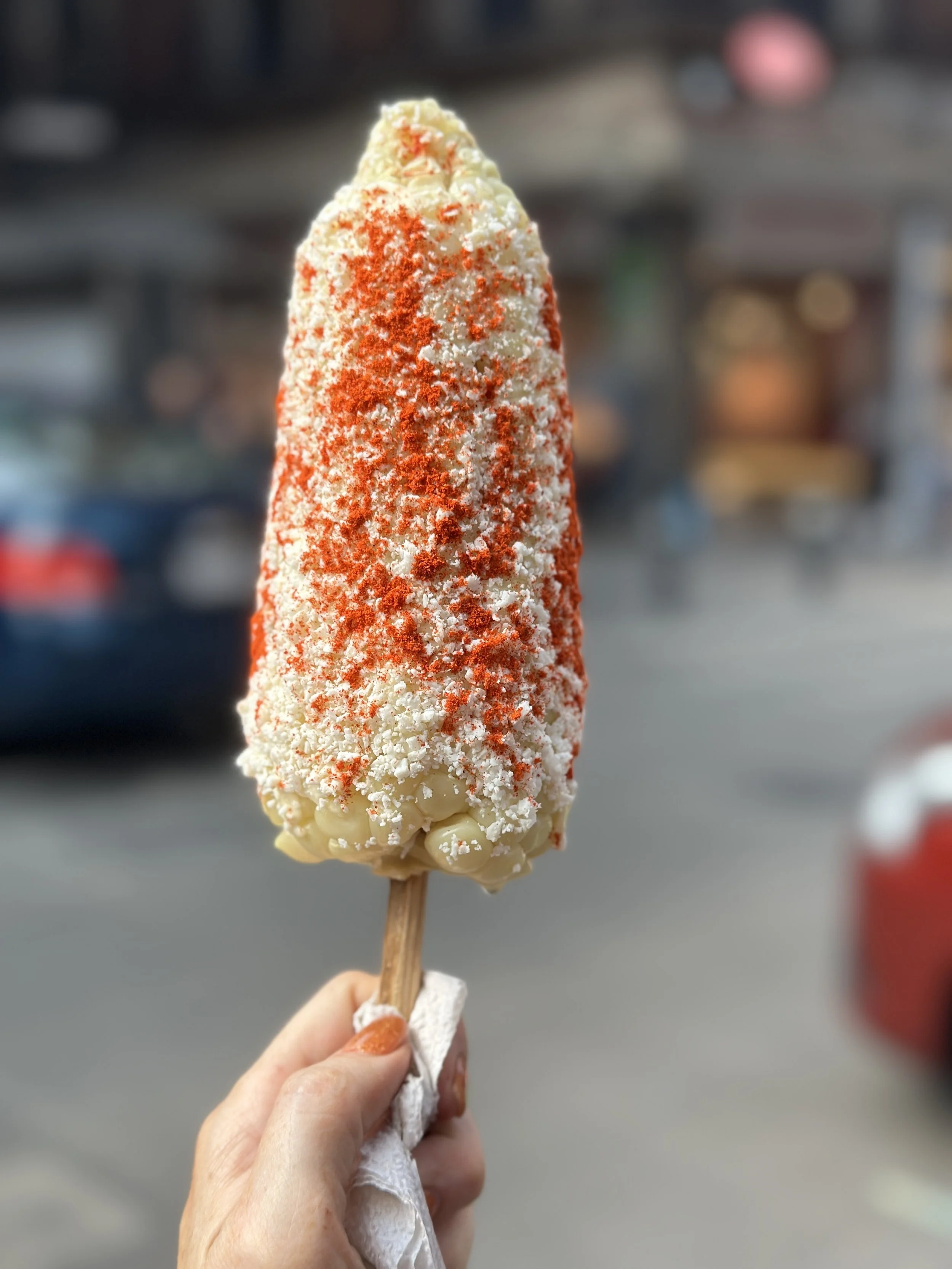
Street corn is the snack I plan my walking routes around.
Here's why I think you should come with us:
1. It's an international trip that doesn't require much PTO
The trip runs five days, May 12–16, 2027, and Mexico City is a short flight from much of the US. You don't have to burn your whole year's vacation or spend two days recovering from jet lag. You do get a passport stamp, a completely different food culture, and you're back at home before anyone has a chance to miss you.
2. You get your first taste of authentic tacos within a few hours of landing
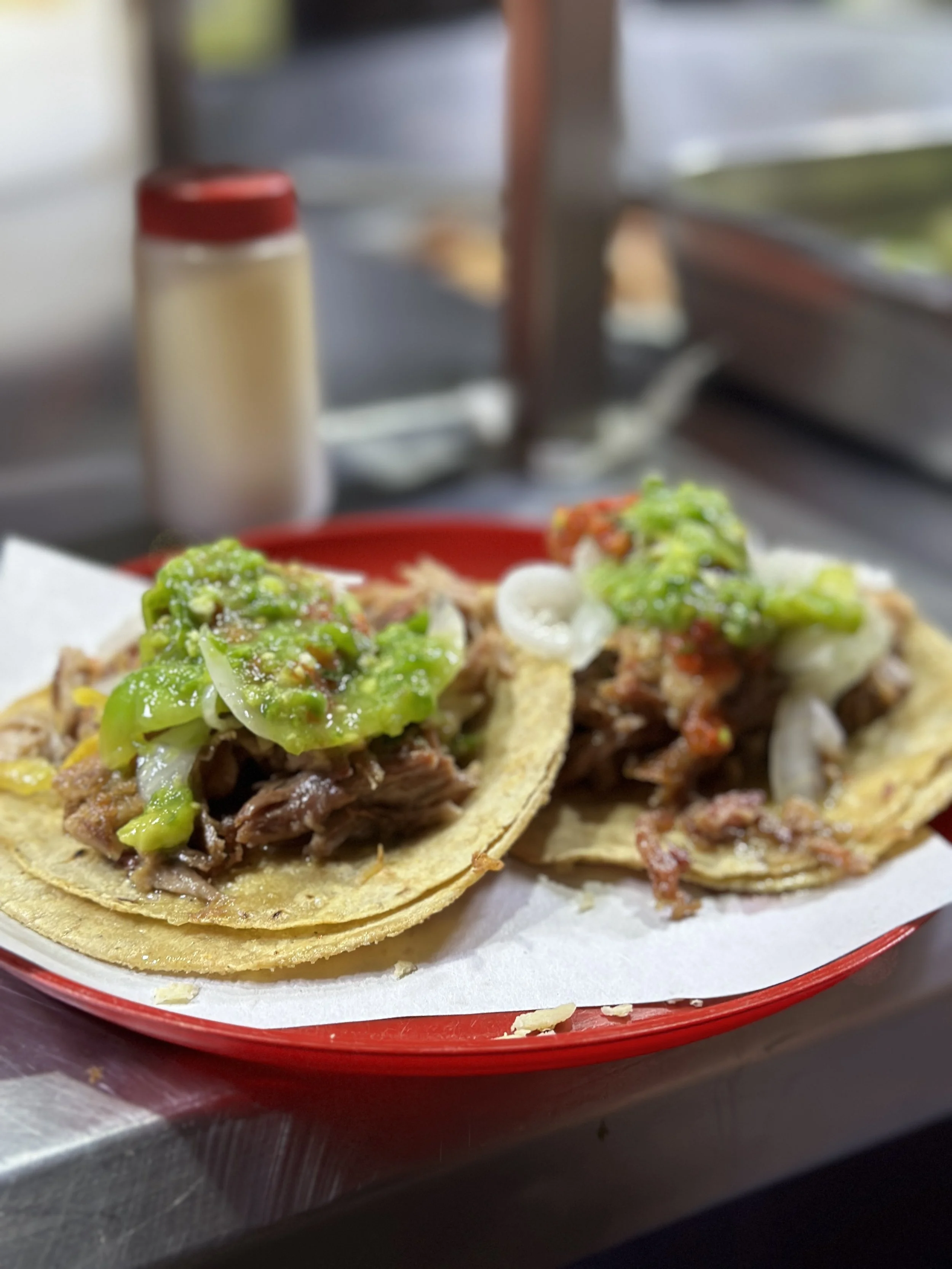
When it comes to food tours, I don't believe in "easing in." After you settle into the hotel, you'll head straight out for a taco crawl through some of CDMX's favorite taquerías. Expect al pastor, rich birria, grilled carne asada, and a few local favorite flavors you might not be acquainted with yet. It's also the first chance your group has to meet each other—and it's very hard to stay strangers when you're low-key having a taco eating contest.
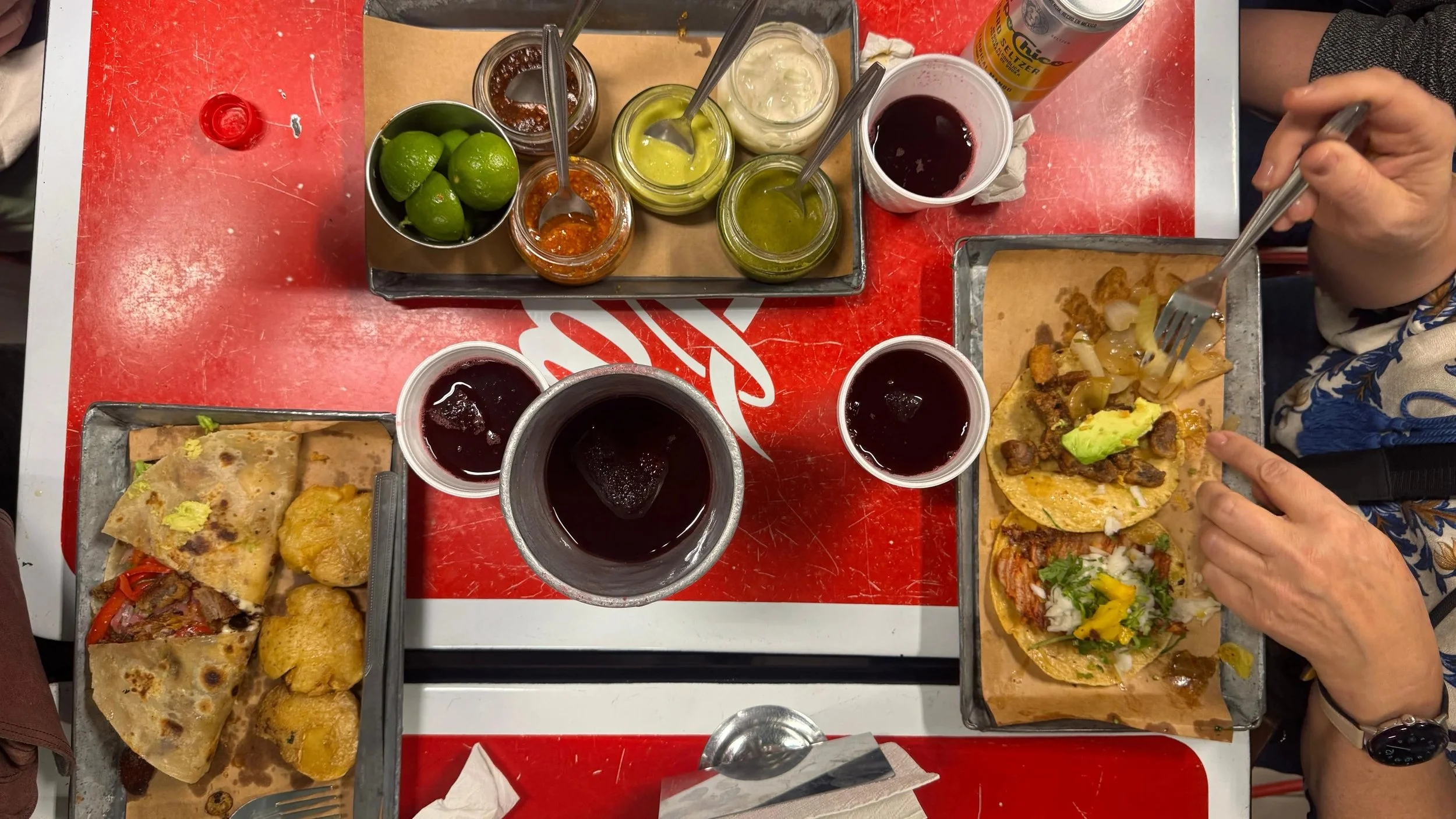
This is what the first night of the trip looks like.
3. You'll eat your way from a Roma bakery to the canals of Xochimilco
Day two of the trip starts with a walk through Roma and Condesa, two neighborhoods full of leafy streets, bookstores, galleries, and cafés. There's a mandatory stop at Panadería Rosetta, the Roma bakery run by chef Elena Reygadas, who was named the World's Best Female Chef in 2023. There's often a line out the door, and it's worth the wait for the rol de guayaba, a soft, flaky roll filled with guava jam and fresh cheese.
I accept no responsibility for how many you eat.
In the afternoon, we trade city streets for the floating gardens of Xochimilco. Instead of the party boats, you'll cruise the canals by trajinera to a regenerative farm on one of the chinampas, the farm plots built out into the water centuries ago that still feed the city today. Then we sit down for a feast of handmade antojitos (quesadillas, sopes, tetelas, huaraches, whatever's coming off the comal that day) with a guided tasting of four Oaxacan mezcals. Consider it your mezcal education. It's a very enjoyable subject.
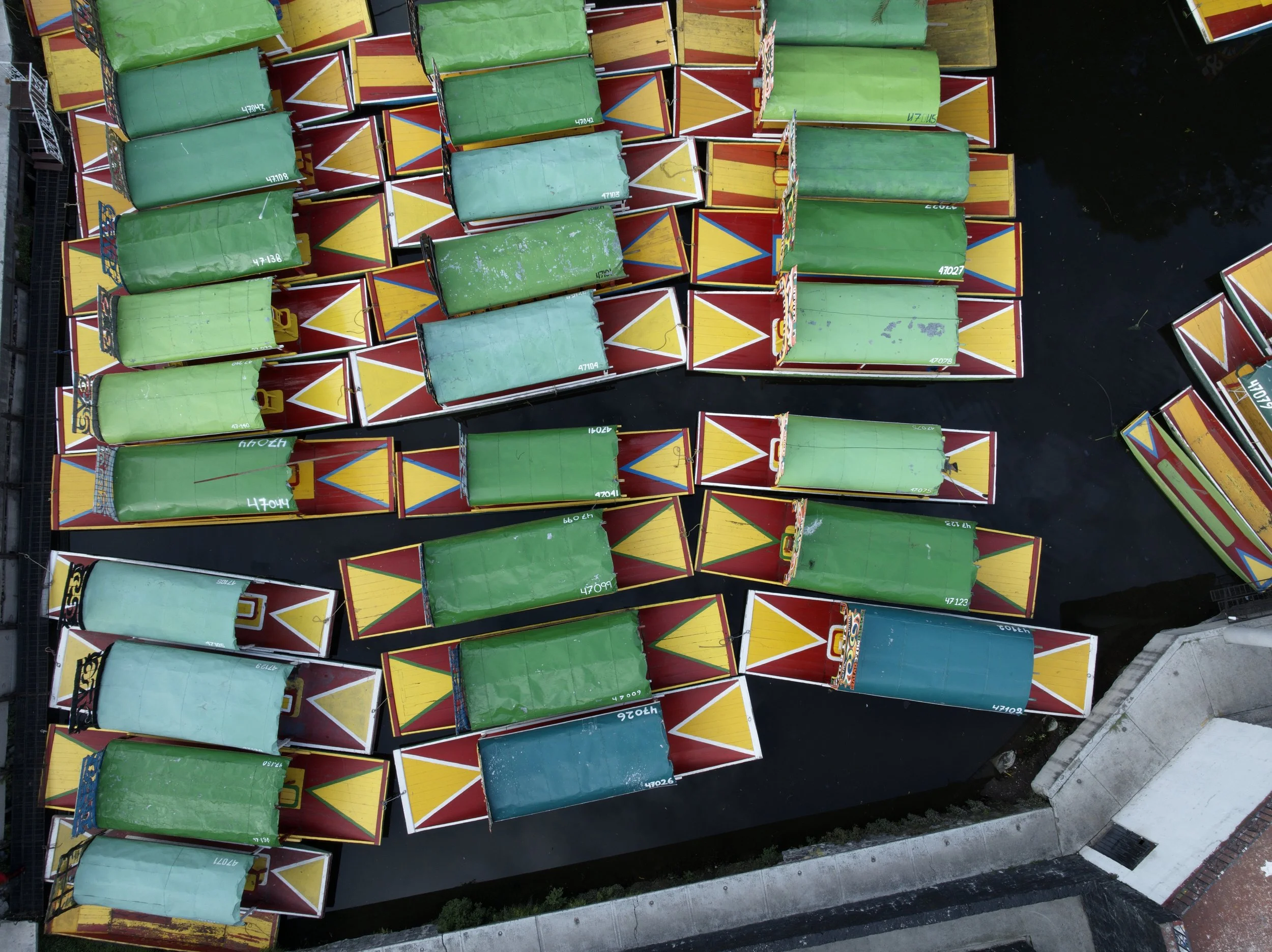
The trajineras of Xochimilco, lined up and waiting for the afternoon.
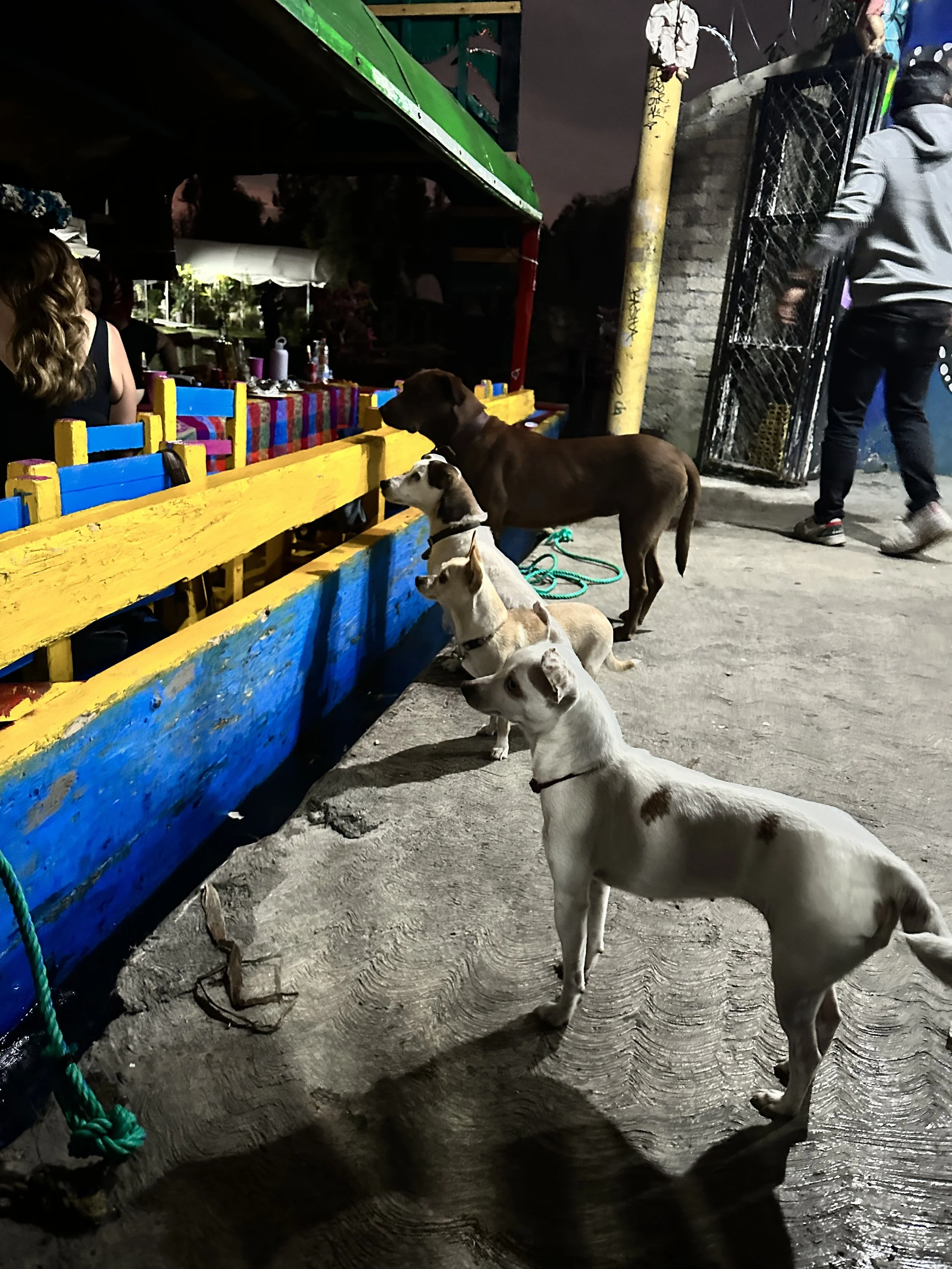
The most dedicated diners at Xochimilco.
4. You'll learn the cuisine from the market up
If you want to understand how the Mexican people eat, the market is the best place to start. On day three, you'll walk through a traditional market with local chefs, meet families who have sold there for generations, and taste seasonal fruit, spices, and moles while you learn how the cuisine grew from its pre-Hispanic roots.
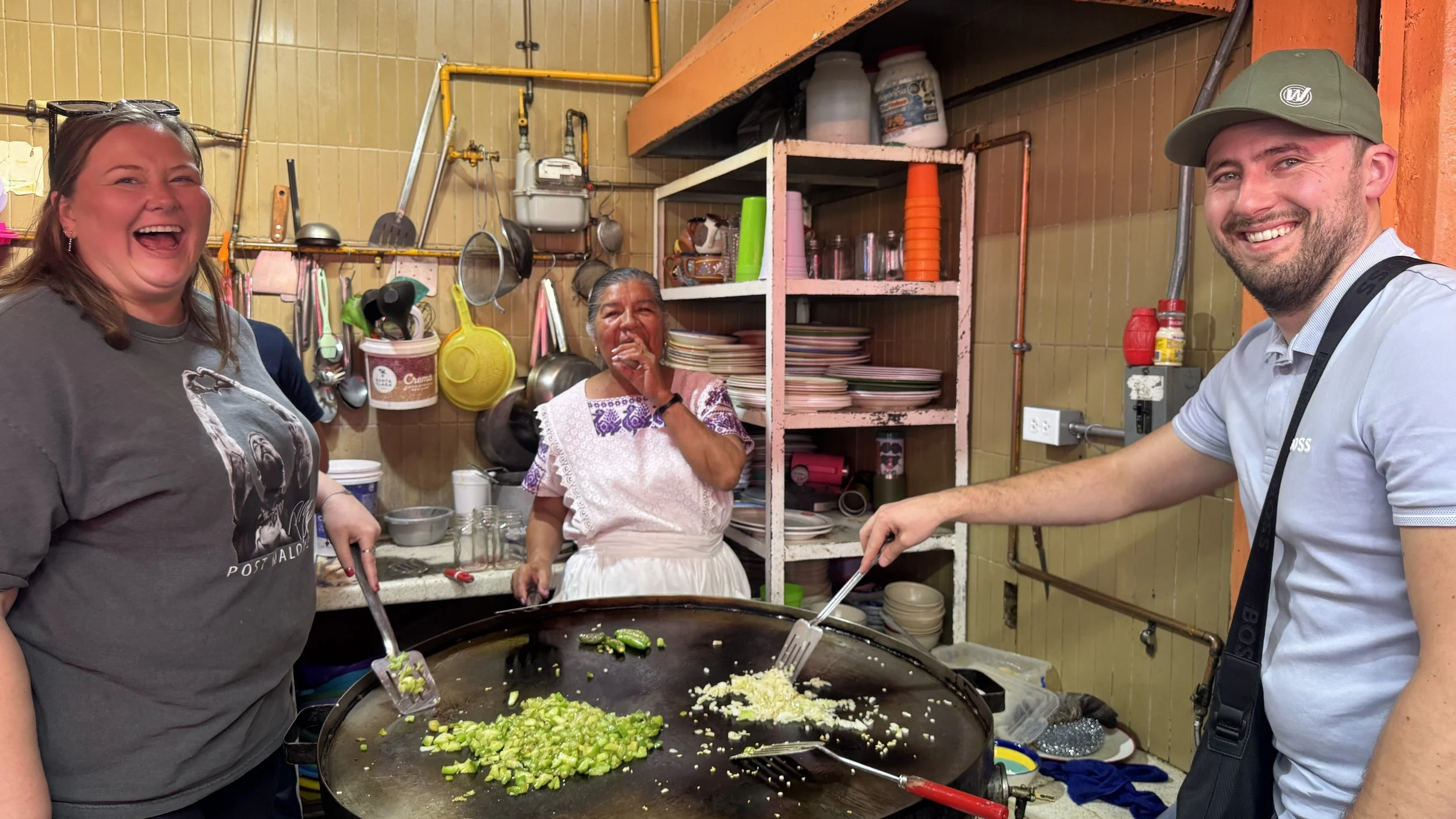
The cook let our travelers take over her comal, and she laughed the whole time.
Then, you'll cook. You'll make tortillas by hand, learn a few essential salsas, and put together a four-course lunch with the ingredients you just bought. A guided mezcal and tequila tasting comes before we sit down to eat what we made (and that's the best part of any cooking class). If the cooking class is the part you're most excited about, self-taught chef Hannan Zary's advice on becoming a better home cook makes good homework.
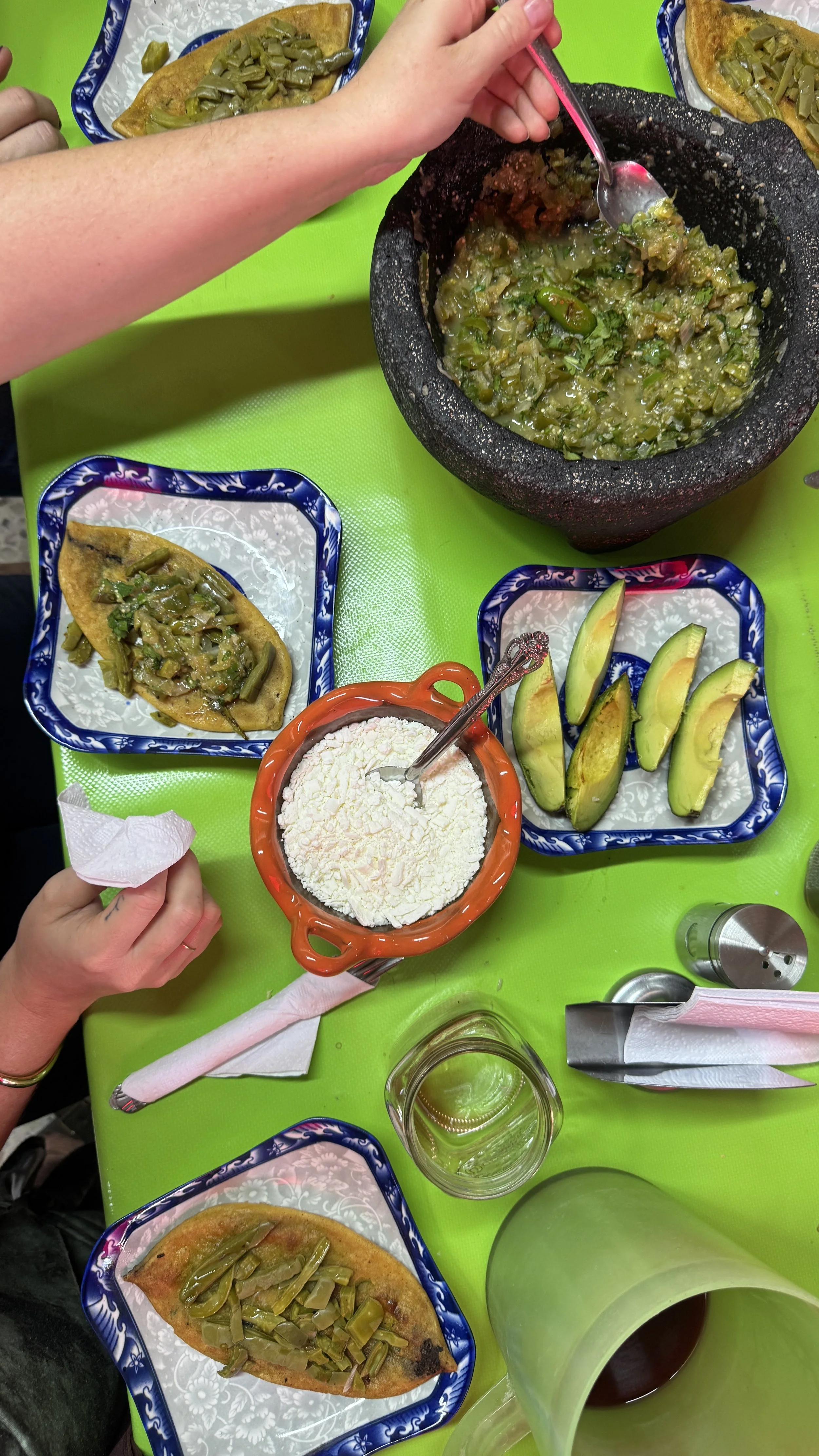
Lunch was nopales, fresh cheese and salsa straight from the molcajete.
5. You'll get some time to explore one of my favorite places in CDMX
On day four, you get the whole morning to explore Coyoacán. I love this borough of the city—it's one of the oldest neighborhoods in CDMX, with cobblestone streets, brightly painted houses, and plenty of parks to linger in. Frida Kahlo's home, Casa Azul, is here—and if you love her work, stopping here is a must.
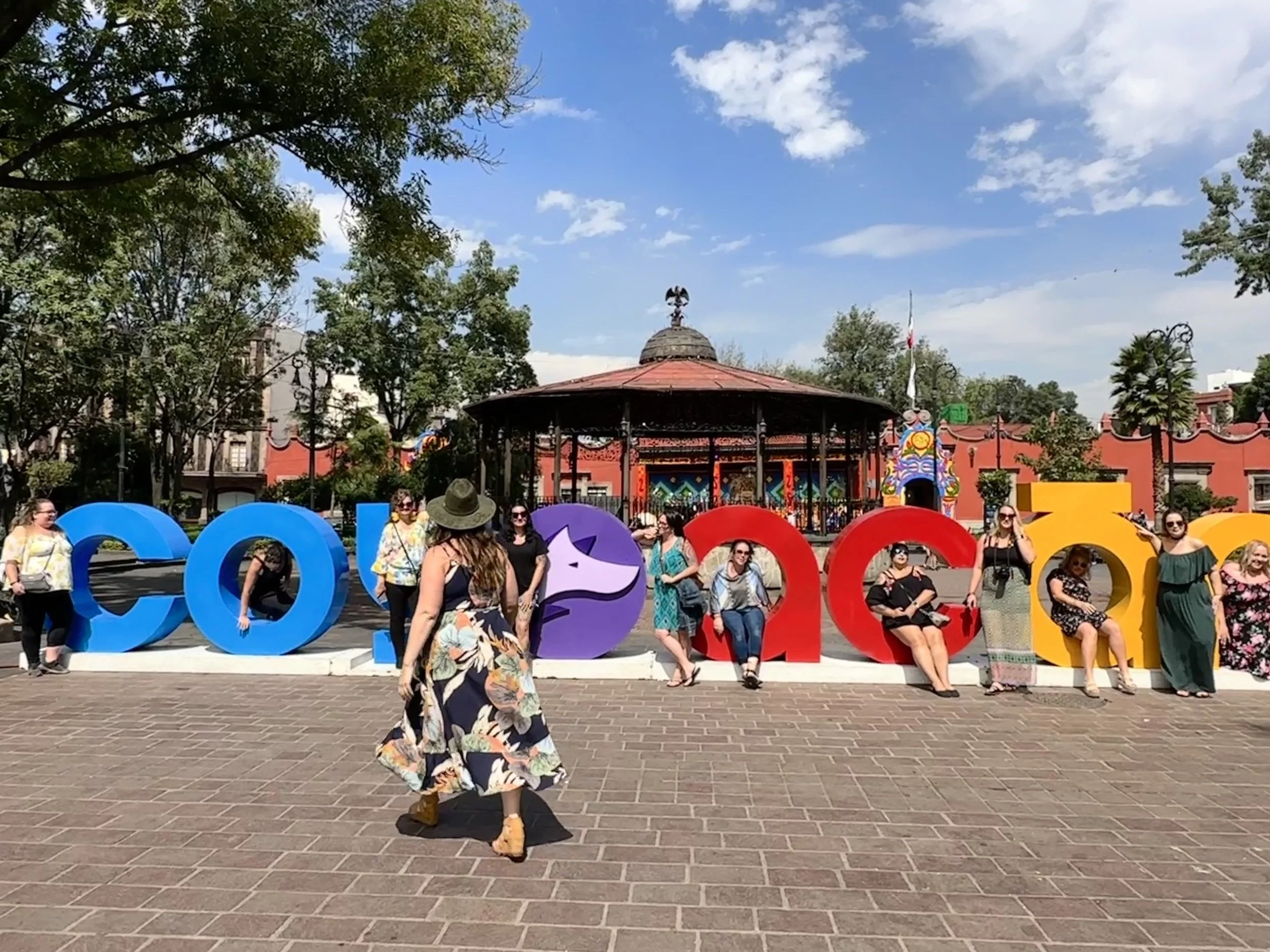
Every group gets one Coyoacán sign photo. It's the law.
Or, if you'd rather keep eating, the Mercado de Coyoacán has what I think are the best tostadas in all of Mexico City. Order the tinga, pata, or camarón especial, and get them con todo (with everything). Then grab a coffee at Café El Jarocho and find the churro stands between the market and Jardín Hidalgo, where you can get them filled with Nutella, cream cheese, apple pie, or even tequila. I put all my favorite stops in one place in my guide to the seven things you have to see in Coyoacán.
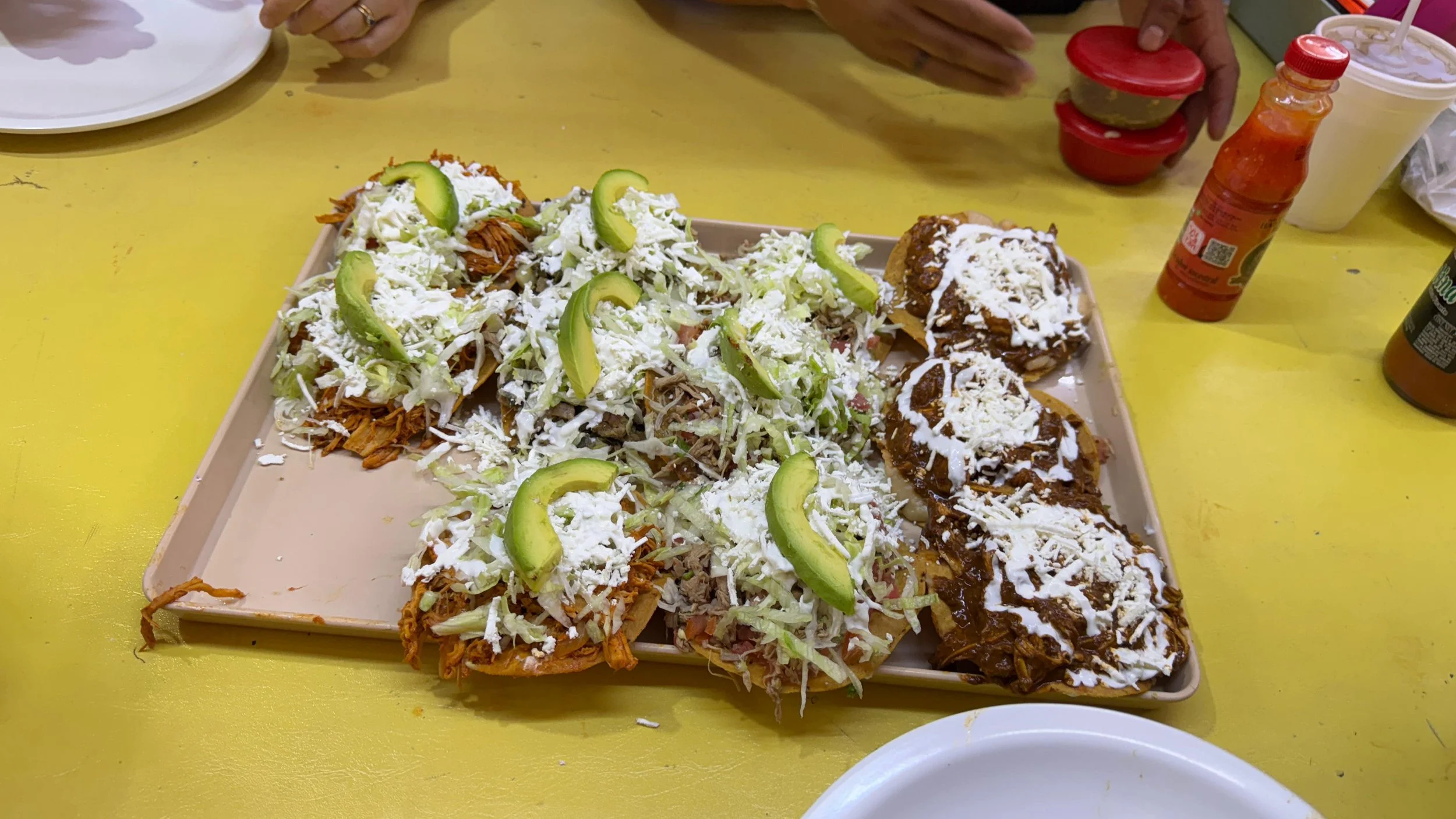
These are the best tostadas in Mexico City. I will not be taking questions.
You also have the whole afternoon free, which you can use to explore Coyoacán or head back to Roma or Condesa for some last-minute shopping or some downtime at a café or bar.
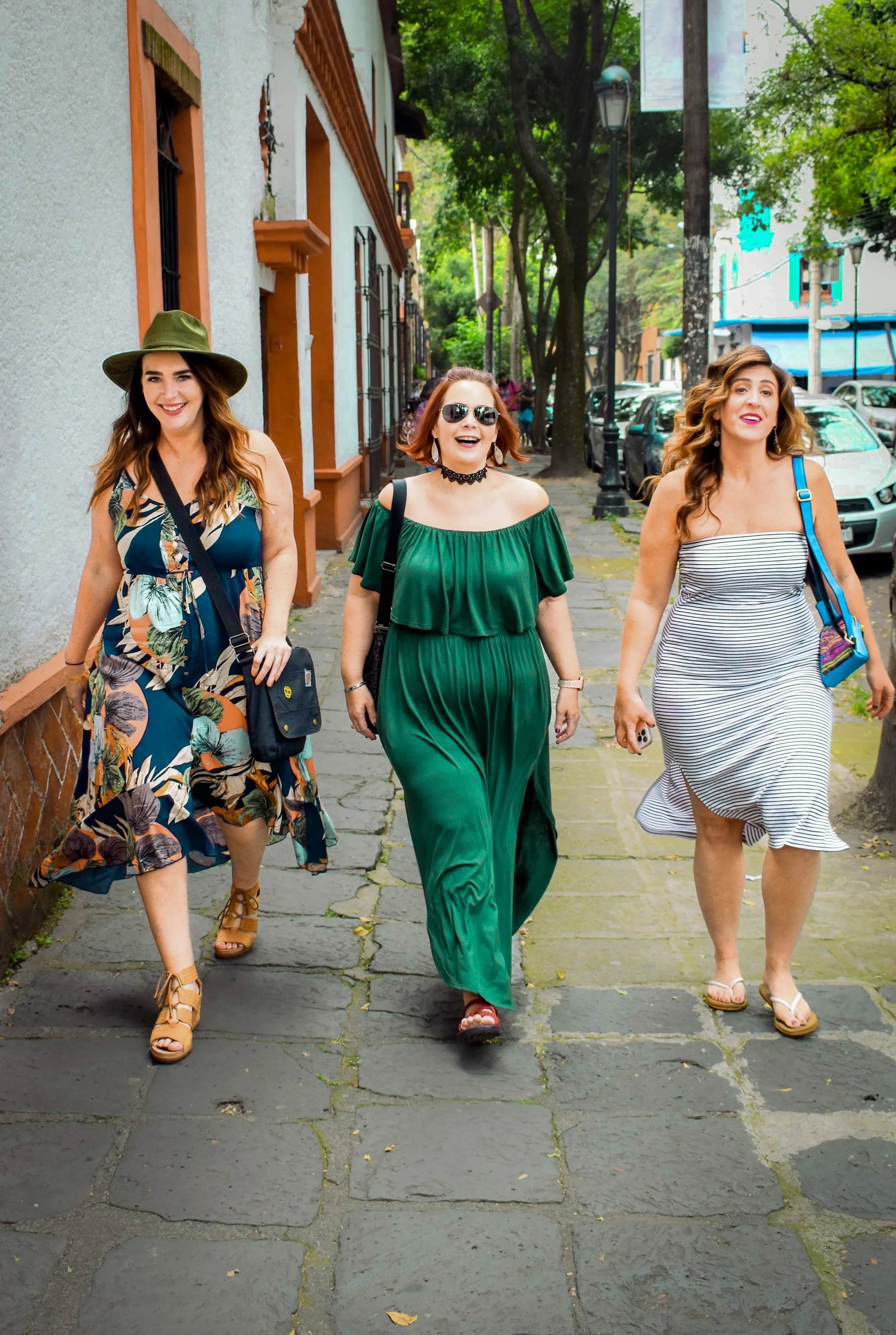
Coyoacán is best on foot, preferably on the way to a snack
6. The last dinner is at Pujol, and we save the best for last deliberately
Pujol is the restaurant that put Mexican fine dining on the world stage. Chef Enrique Olvera opened it in 2000, and it has since earned two Michelin stars and a long run on the World's 50 Best Restaurants list, climbing as high as No. 5 in 2022. People plan entire trips to CDMX around a reservation here. (When Pujol did a short residency in New York last fall for its 25th anniversary, the advice for anyone hoping to get a seat was to click fast.)
The dinner is a coursed tasting menu that moves through Mexican food from its roots up. The tortillas are made from corn nixtamalized in-house, and many dishes start from something you'd find at a street stand or a family table. However, the dish everyone talks about is their mole madre.
Pujol's kitchen started it in 2013 and has been reheating and adding to it ever since, the way a baker keeps a sourdough starter alive. It comes to the table as a ring of dark, deeply complex mole that has been aging for years, with a fresh mole in the center so you can taste the difference side by side. You eat it with warm tortillas, and I'd suggest closing your eyes for the first bite. It's that good.
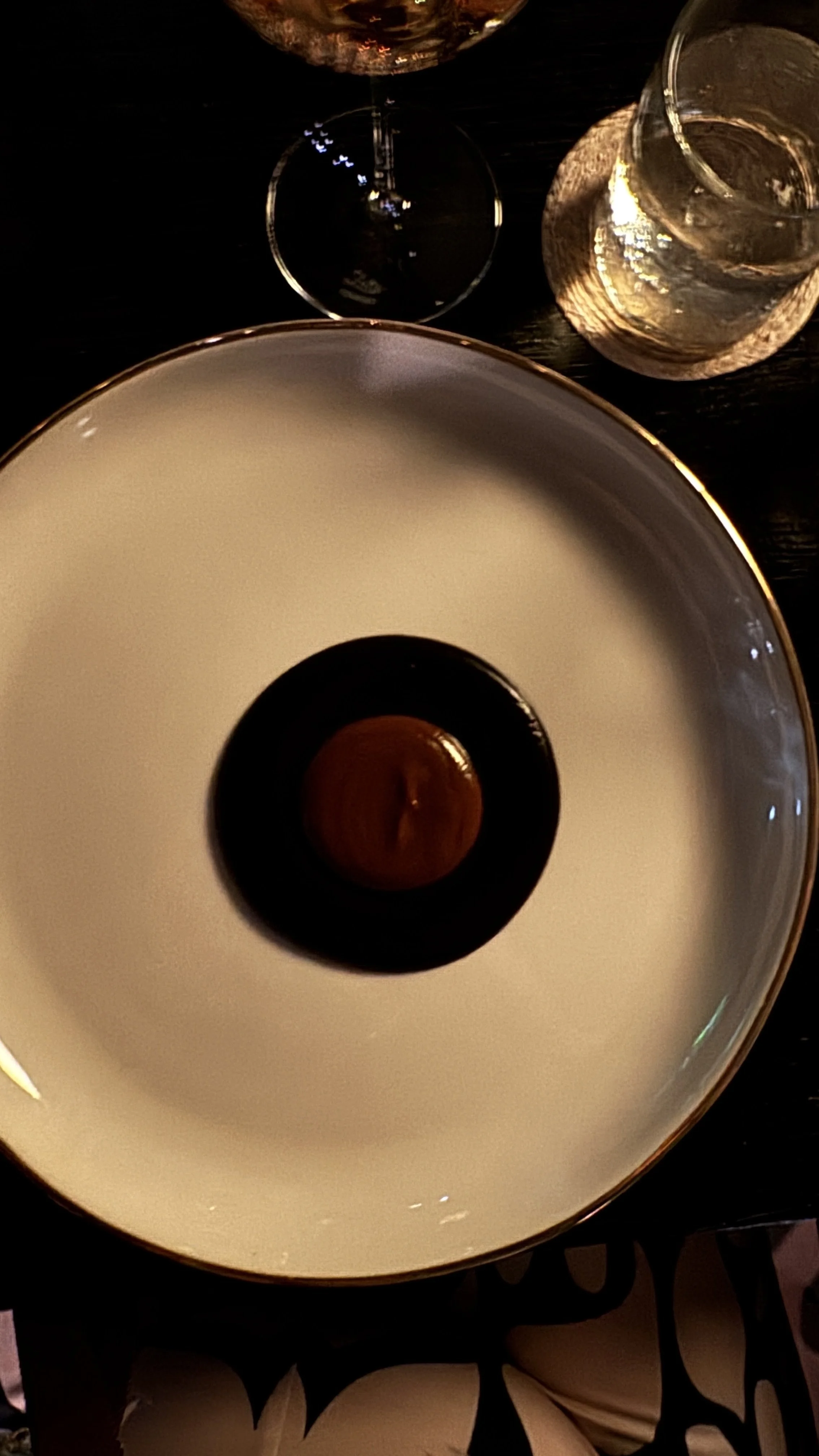
The mole madre has been aging since 2013, and you can taste every year of it.
Each course can be paired with a drink, and the pairings are a big part of the night. Wines from Mexico and around the world sit alongside tequila and other Mexican spirits. Each pour is chosen to match what's on the plate.
I've eaten at Pujol five times—and have taken many groups here—and the thing that gets everyone, every time is the service. There's no other way to describe it other than careful choreography. Courses arrive in perfect timing, servers walk you through every dish, and the whole thing is so smooth that you don't notice how much work goes into it. It's a three-hour meal, designed to linger—and it's worth every second.
By the time we sit down at Pujol, you'll have spent three days in taquerías, markets, and a cooking class. You'll know the corn, chiles, and moles on your plate because you've already tasted them in their simplest form. You'll have stood at the market stalls where ingredients like these get sold and pressed tortillas with your own hands. At Pujol, you'll see what one of Mexico's best kitchens does with them.
Getting a table at Pujol takes planning. Reservations usually book up two to three months out, and booking the private dining room for a group can take a year or more. On this trip it's already included, so your only job is to show up hungry one more time and decide on drink pairings.
A dinner at Pujol deserves its own post, so I wrote one. Read about our night at Pujol if you want to drool on your phone screen.
7. María will make sure you don't miss anything good
Your trip leader, María Saenz, grew up in Bogotá and has spent her life interested in how people, places, and food connect (mostly food). She's the person behind Entre Platos, built on the idea that if you want to understand a culture, you sit down at its table, and she's a devoted market wanderer, which means she's the perfect person to take you through this particular CDMX trip.
Meet María, your trip leader. She's even happier at a market stall.
Let us save a seat for you at the table
If you love food and want to eat your way through Mexico City without doing all the research yourself, we'd love to have you along. Join the Mexico City waitlist to get first access to book on November 12, before the trip goes public.
Curious what a Type 2 Travel trip to Mexico City actually feels like? Read what Mexico City did to one of our past travelers, or listen to three of them talk it through on the Type 2 Travel podcast.
Mexico City Food Tour Questions We Actually Get Asked
How much does the Mexico City food tour cost?
The trip is $3,800 per person in a shared room, or $4,840 if you'd like a room to yourself (a $1,040 single supplement). It's $900 to book your spot, with the rest split into payments through March 1, 2027. The waitlist gets first access to book on November 12, before the trip goes public.
Can I come alone?
Yes, and you'll be in good company. Over half of our travelers arrive solo, and this is a coed group of just 10 to 14 people, so you'll know everyone by the second taco. You'll fill out a short questionnaire so we can match you with a roommate, or you can book a private room for the single supplement.
What if I'm vegetarian or have food allergies?
Let us know when you book. Most of the restaurants and culinary experiences on this trip can accommodate dietary restrictions and allergies. Street food stops are the exception, since options there can be more limited, but we'll do our best to find you alternatives.
What isn't included?
Your flights to Mexico City, meals and drinks not listed in the itinerary, optional activities during free time, tips for local guides and drivers, and personal expenses. Travel insurance is required (at minimum, post-departure medical coverage). We point travelers to Wanderwell, our affiliate partner.
Is Mexico City safe for a food trip?
You'll be with vetted local guides, professional drivers and a Type 2 Travel trip leader who knows the city, and we send you practical safety information for Mexico City before you go. Nowhere is completely risk-free, but I've brought groups here for five years.